
A $7.5 Million Trail Upgrade Is Reshaping 3rd Ward and EaDo Right Now
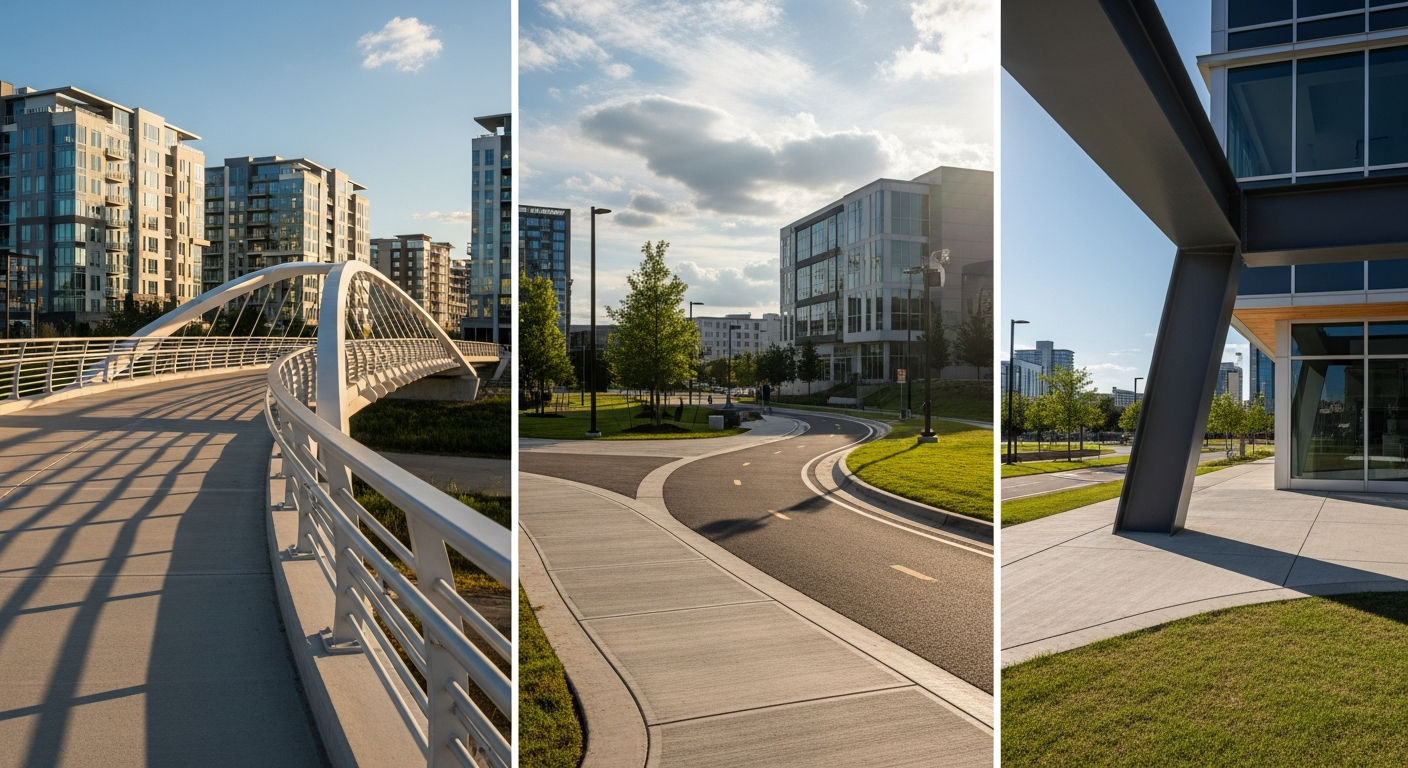
This post is for anyone eyeing a home in Third Ward, East Downtown, or anywhere along Houston's inner-loop east side. A major public infrastructure investment just kicked off on the Columbia Tap Trail — and if you're watching these neighborhoods, you should understand what's changing, what it means for the area, and why the timing matters.
If you thought the Columbia Tap Trail was already a hidden gem, you haven't seen what it's about to become.
Phase 1 of a $7.5 million improvement initiative launched this week, and the work is visible on the ground. More than 300 solar-powered lights are being installed along all four miles of the trail — with the first installations timed ahead of the FIFA World Cup. This isn't a ribbon-cutting promise. It's happening.
Context
The Columbia Tap Trail is a four-mile public trail that threads through some of Houston's most culturally layered neighborhoods. It connects Third Ward, East Downtown (EaDo), Texas Southern University, and Shell Energy Stadium in one continuous corridor. At its southern end, it ties into the 16-mile Brays Bayou Trail system, which runs all the way to Hermann Park and the Museum District.
That connectivity matters more than it might seem. A trail that links walkable green space to a major university campus, a professional sports venue, and eventually Hermann Park is a different kind of asset than a neighborhood jogging path. It's a linear spine through an area that's already drawing serious buyer attention.
The history behind the trail adds another layer worth understanding. The Columbia Tap follows the exact route of the Houston, Tap and Brazoria Railway, a line chartered in 1856. That railway was built by enslaved Black men to move sugar and cotton from Brazoria County plantations to the Port of Houston. Future phases of the improvement project will include heritage signage that tells that story on the trail itself — which is part of why the community investment here carries meaning beyond the physical upgrades.
What the Improvement Plan Actually Includes
Phase 1, now underway, focuses on lighting — 300-plus solar-powered lights across the full four miles. That single change addresses one of the most-cited concerns about trail use after dark and directly expands the hours the trail is practical for commuters, joggers, and families.
Future phases, scheduled through 2027, will add:
- ·Emergency call boxes along the route
- ·Intersection safety improvements at trail crossings
- ·Wayfinding and heritage signage honoring the trail's history
The full investment is $7.5 million. That's not a small neighborhood grant — it's the kind of number that signals long-term commitment from the city.
What It Means for You
Infrastructure investment like this tends to show up in neighborhood desirability before it shows up in listing prices. That's not speculation — it's how these cycles generally work. When a trail becomes safer, better lit, and more connected, more people use it. More foot traffic reinforces the case for walkable retail, coffee shops, and restaurants nearby. That activity makes the surrounding blocks more attractive to buyers.
Third Ward and EaDo are already two of Houston's more closely watched inner-loop neighborhoods. EaDo in particular has seen significant residential development alongside its entertainment and dining scene. Third Ward carries deep cultural roots — with TSU, Project Row Houses, and historic institutions that give it a character you can't manufacture.
If you're a buyer considering either neighborhood, the trail upgrade is worth factoring in alongside the usual checklist of schools, commute, and flood zone. A four-mile trail connecting to 16 miles of bayou greenway, lit and safe, is a lifestyle feature — and it's arriving now.
If you're a seller in the area, this is a legitimate value conversation to have with your agent. Proximity to public trail access is something buyers ask about and agents can point to in a listing presentation.
Common Questions
Is the trail safe to use right now?
The lighting installation is in progress, with early phases timed for before World Cup events at Shell Energy Stadium. Trail conditions will continue improving through 2027 as each phase is completed.
Does the trail actually connect to Hermann Park?
Not directly on its own — the Columbia Tap Trail connects to the Brays Bayou Trail at its southern end, and the Brays Bayou system runs 16 miles and does reach Hermann Park and the Museum District. It's a connected system, not a single path.
What neighborhoods are closest to the trail?
The trail runs through Third Ward and EaDo primarily, with TSU and Shell Energy Stadium as anchors along the route.
Will construction affect the trail while work is underway?
The Reel doesn't specify any temporary closures, so check current city updates or Houston Parks and Recreation for the latest on access during installation.
What Happens Next
The improvements run through 2027 in phases. That means this story isn't finished — the trail will keep getting better over the next two-plus years. For buyers who get into these neighborhoods now, they'll experience the full benefit of the upgrade as it unfolds. For those waiting on the sidelines, the trail will be one more factor drawing attention — and buyers — to an area that's already competitive.
Houston's inner loop east side has been on a long, slow rise. The Columbia Tap investment is a signal, not a starting gun — but it's worth paying attention to.
Search active listings near the Columbia Tap Trail corridor and let's talk about what fits your timeline.